Why expat net worth is unusually hard to track
Moving countries rarely closes the previous financial life cleanly. An expat may keep a home-country bank account, receive salary in a new currency, hold retirement assets elsewhere, use Wise or PayPal, carry cash for travel, own crypto, and repay a loan in yet another currency. No single bank sees the complete balance sheet.
The obvious solution—connect everything—often breaks at borders. Aggregators have country-specific coverage, institutions change authentication systems, and some assets never expose a connection. A beautiful dashboard can be incomplete while still looking authoritative.
A useful expat tracker must therefore solve two separate problems: representation and conversion. It must let every meaningful asset or liability exist, and it must calculate a consolidated view without erasing the currency in which that item actually lives.
The features that matter most for international finances
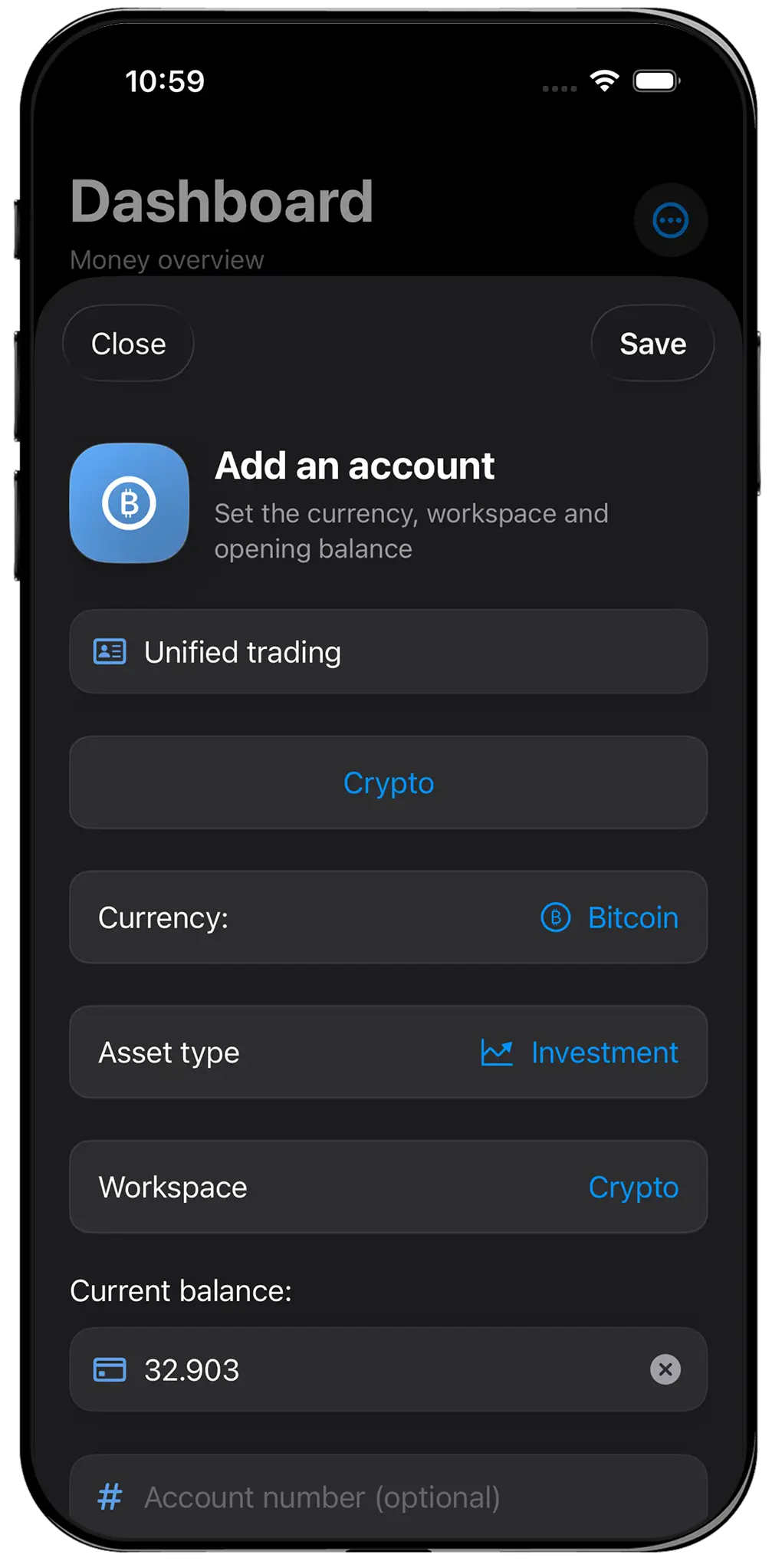
First, every account needs an original currency. A euro account is not simply a changing number of dollars; the euro balance is the owned fact, while its dollar value is a current interpretation. Good tracking keeps both visible.
Second, liabilities must receive the same treatment. A mortgage, tax obligation, credit card, or family loan in another currency can change the consolidated net worth even when its native balance stays constant. Ignoring foreign debt creates a flattering but false picture.
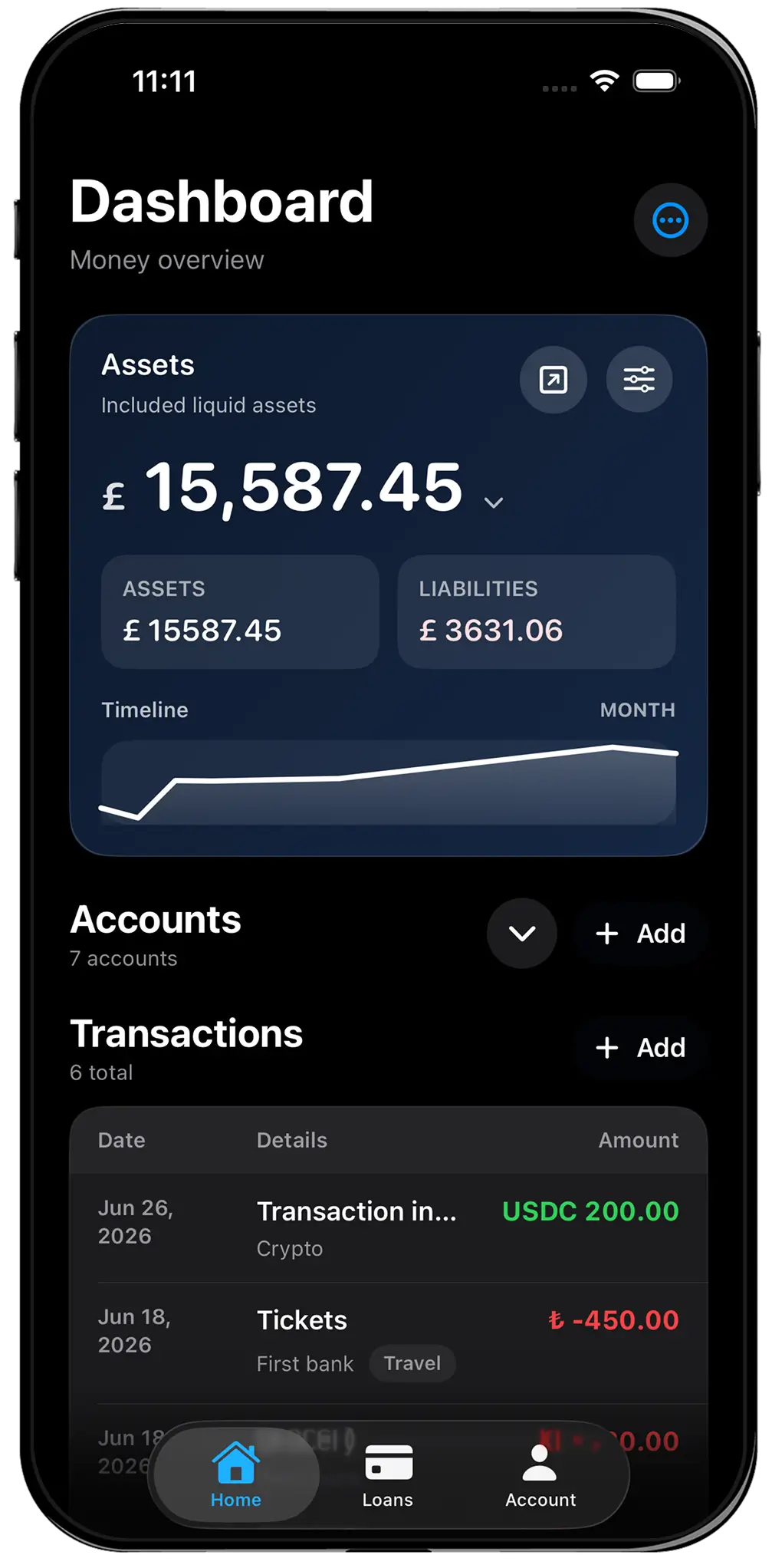
Third, the tracker should separate contexts. Personal funds, a small business, relocation reserves, and long-term crypto may belong to the same person but answer different questions. All Banks workspaces allow those contexts to be reviewed together or filtered without creating unrelated profiles.
- Original-currency balances
- A clearly chosen reporting currency
- Assets and liabilities from any country
- Cash and non-bank assets
- Workspaces for personal, business, travel, and crypto
- Dated snapshots for moves, taxes, or financial discussions
Manual entry can be more complete than international aggregation
Manual tracking sounds like a compromise until the connected alternative omits three accounts and duplicates a fourth. An expat can enter any legitimate balance regardless of the institution's country, API, language, or support status. Cash, private assets, and loans fit the same structure.
The trade-off is freshness. A manual dashboard reflects the last review, not the current minute. For net worth, a monthly cadence is often enough. Use the same date, update high-impact balances first, and record exchange rates consistently. Daily spending should remain in the tools best suited to each country if detailed budgeting is required.
All Banks does not claim to replace local banking apps, tax software, or an accountant. It provides a private system of record above them: a place to state what exists and what it is worth at a given time.
How to choose a reporting currency
Choose the currency in which you make major decisions, not necessarily the currency of your passport. That might be where you pay rent, plan a property purchase, negotiate compensation, or expect to retire. The reporting currency is a lens; it does not change ownership.
Do not rewrite historical native balances after exchange-rate changes. A useful history distinguishes between saving more money and the reporting value moving because currencies changed. Keep source amounts stable and allow conversion to express current exposure.
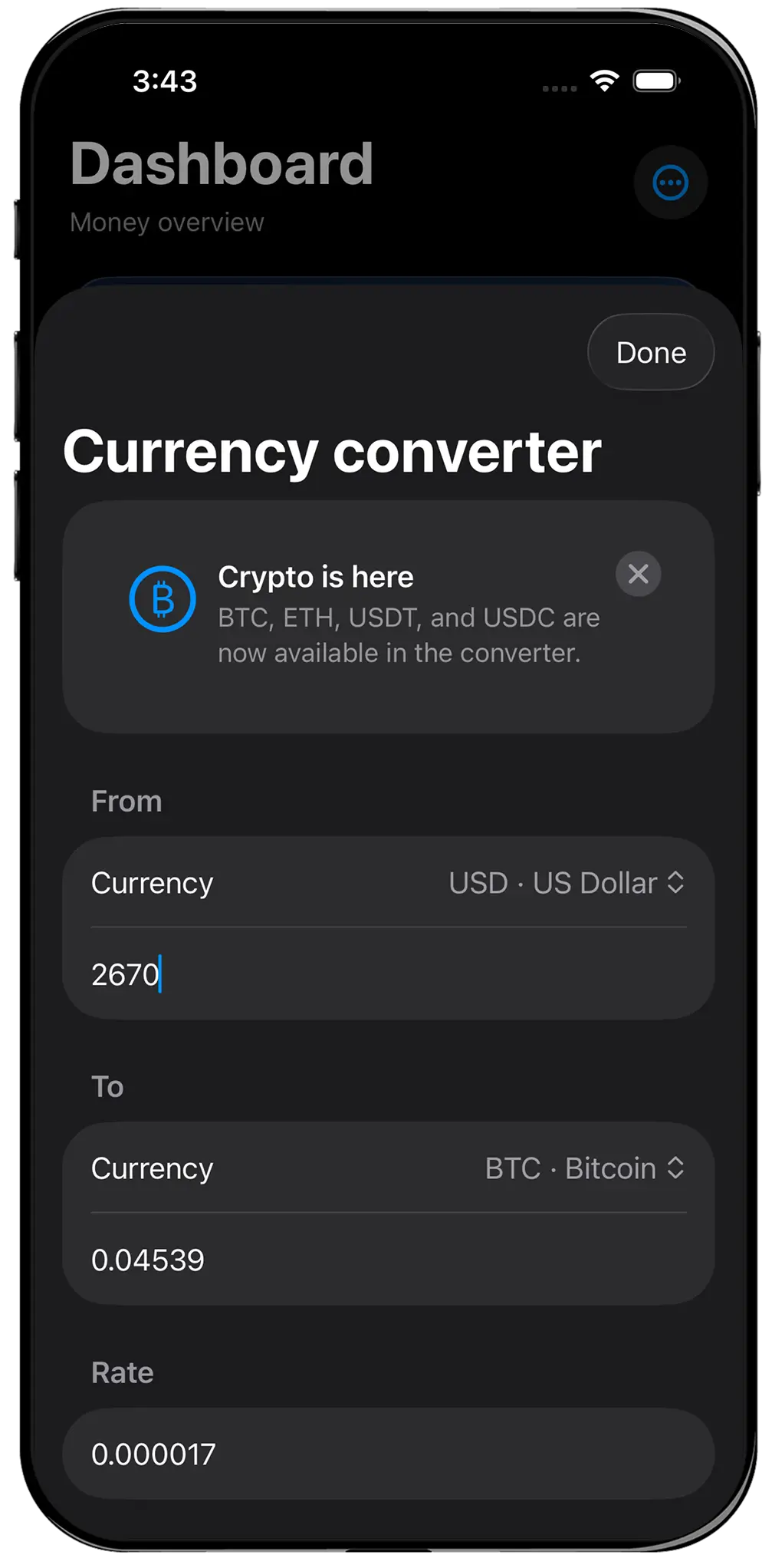
If two currencies are equally important, select one for the dashboard and use the converter to test the other view during review. No single total can remove currency risk; it can only make the current relationship visible.
Documents matter when life crosses borders
International moves produce moments when scattered knowledge must become a readable record: discussing finances with a partner, preparing for a property decision, organizing documents before tax work, or explaining a balance sheet to a professional. A screenshot of one bank is not enough.
All Banks can create a Money Brief and PDF financial snapshots containing balances, currencies, and liabilities. These are personal records, not audited statements or proof of funds. Their value is organization: they provide a dated starting point and reduce the chance that a forgotten account disappears from the conversation.
Keep exported documents secure. They may not contain credentials, but they still reveal sensitive financial information. Share only when necessary and use appropriate encrypted storage or transmission.
Who should choose another app
If all important accounts are in one supported country and you need daily transaction categorization, choose a reputable connected finance app. Automation, budgeting, and shared household access may create more value than manual international flexibility.
If you need securities analytics, tax-lot accounting, live trading, or regulated financial advice, use specialist products. A net worth tracker records positions; it does not replace a broker, exchange, accountant, or adviser.
All Banks is best for an Apple-device user willing to maintain a private cross-border balance sheet. It works on iPhone, iPad, and Mac. Review coverage before price: if a cheaper or automated tool accurately represents every part of your life, use it. If borders are exactly why the picture keeps breaking, manual structure can be the stronger solution.