Why one converted number is not enough
Suppose you own €20,000, $15,000, and £8,000 while owing a $12,000 loan. A single euro total answers one question—what the balance sheet is worth in euros today—but it hides which currencies can actually pay each obligation. Tomorrow the total can change even when none of the native balances moves.
A good multi-currency tracker therefore stores two layers. The source layer contains the account's original balance and currency. The reporting layer converts every included item into one chosen currency for comparison and arithmetic. The source is the owned fact; the conversion is a dated view.
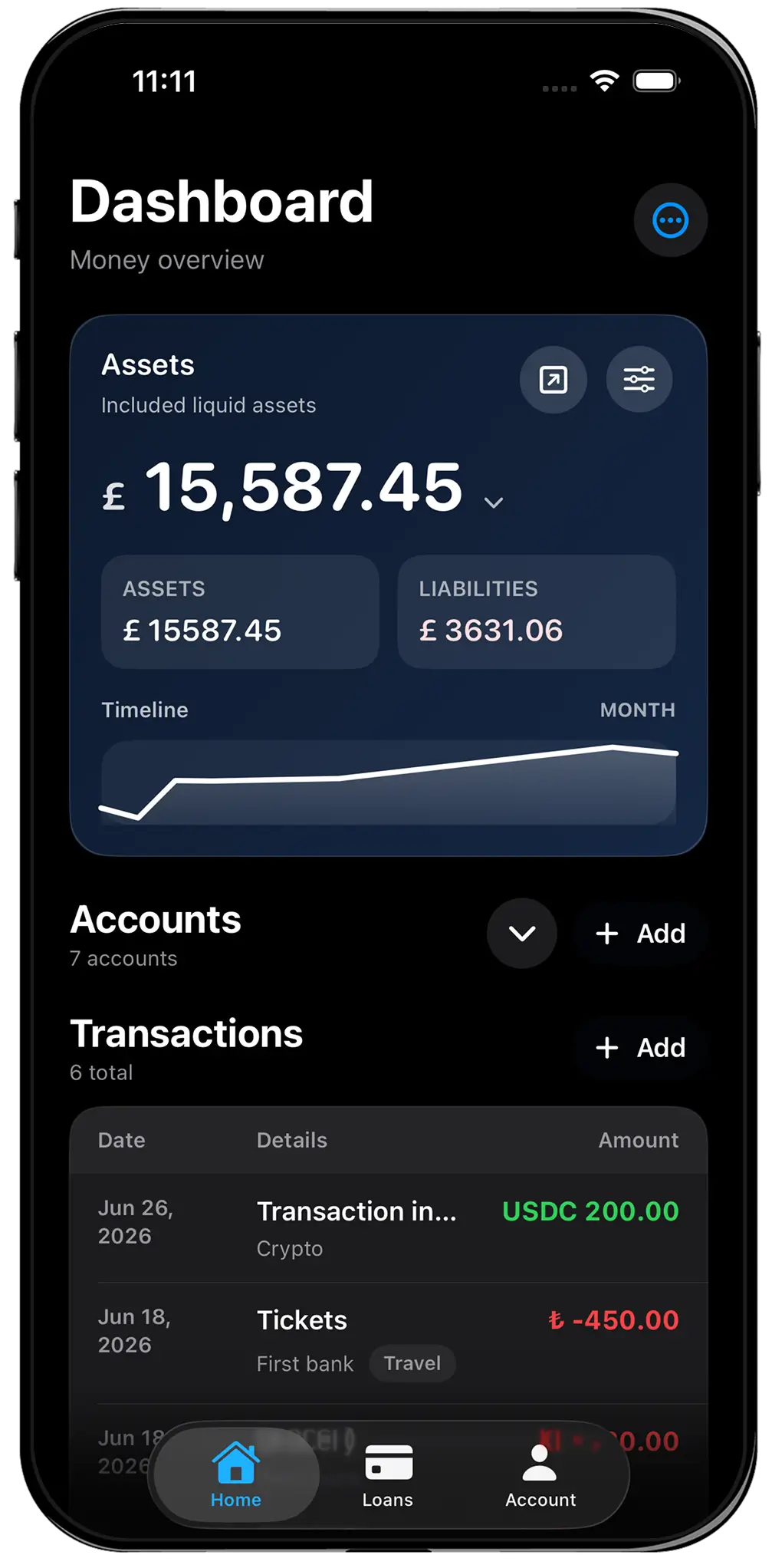
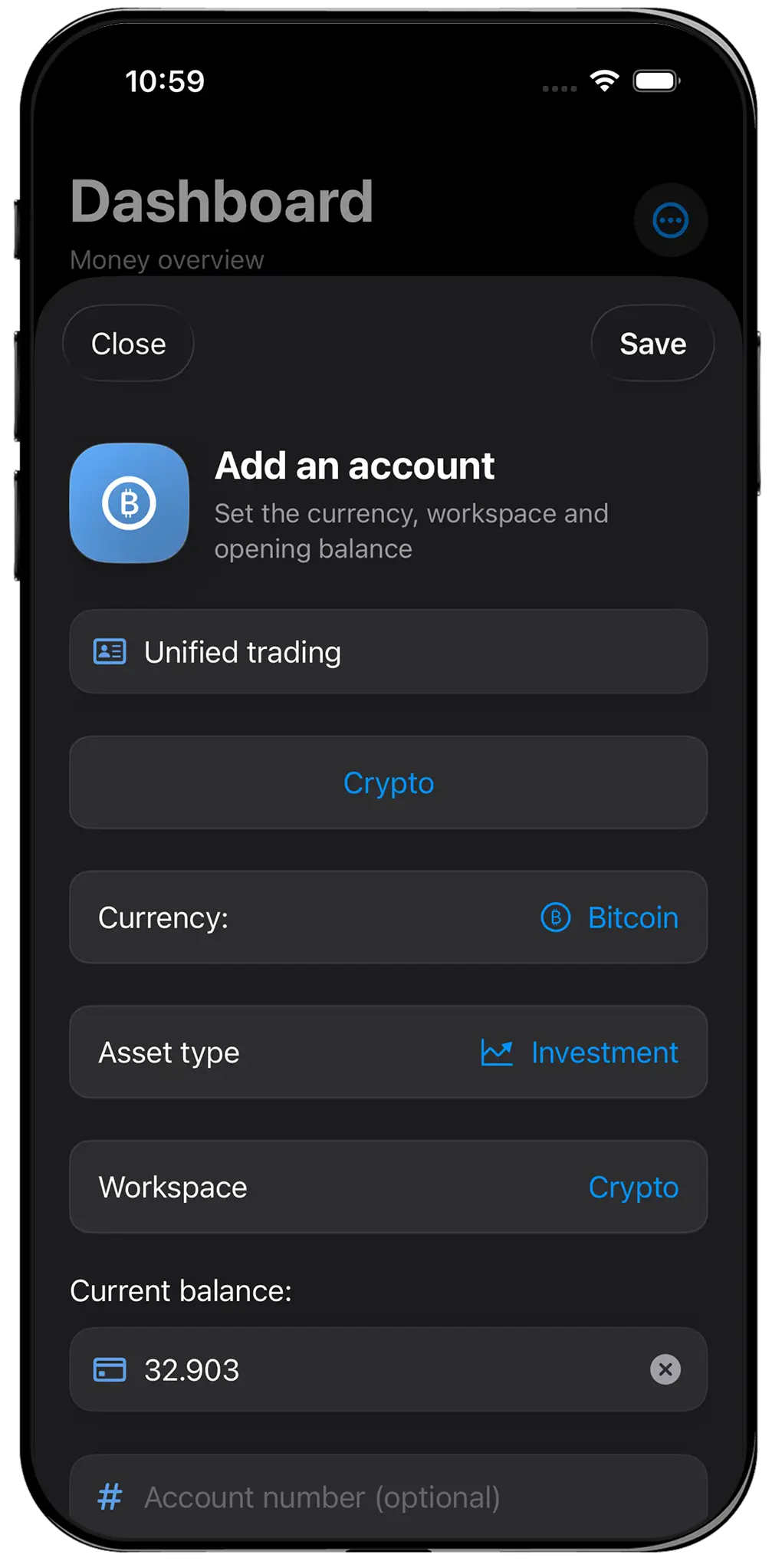
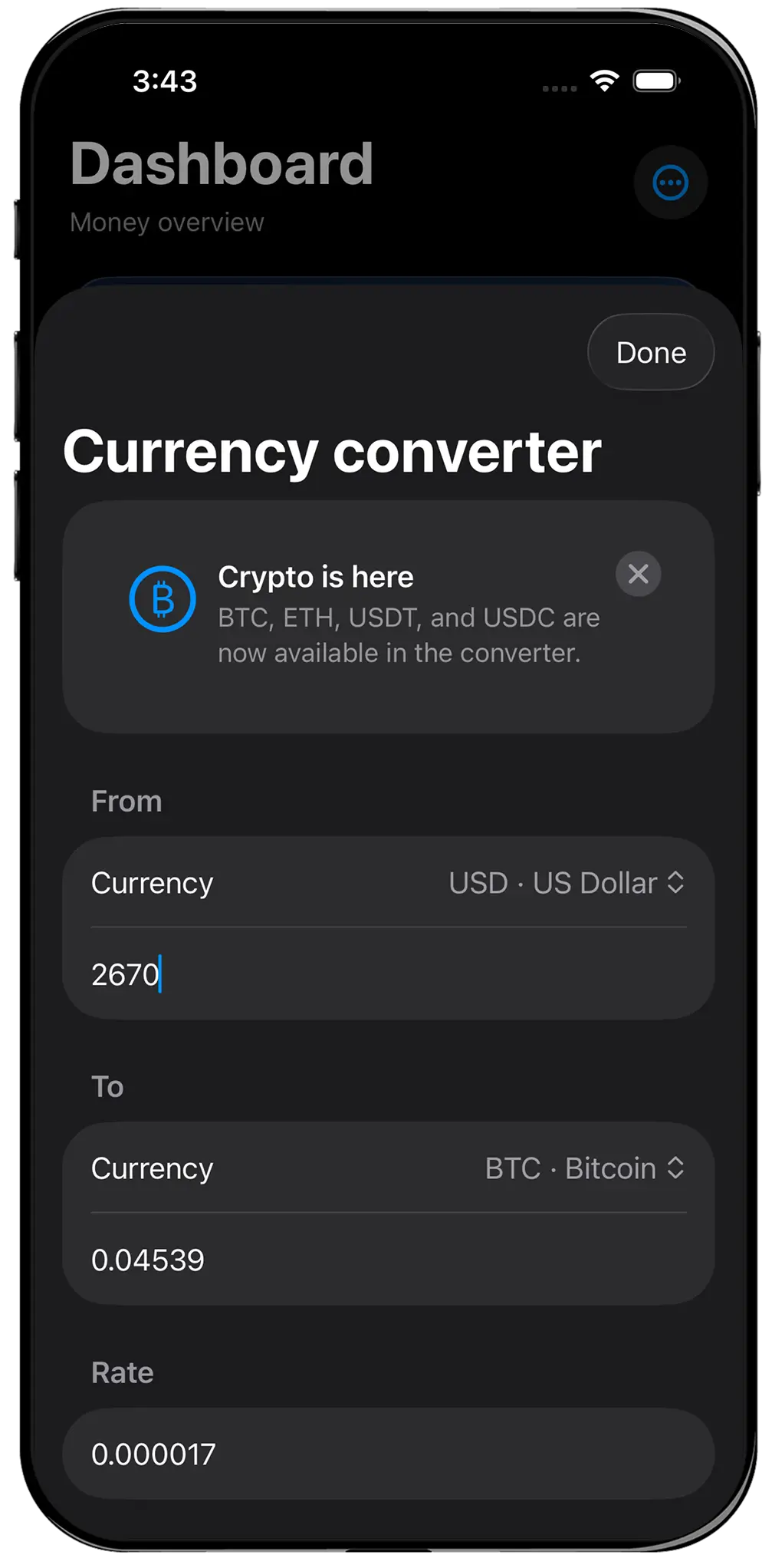
All Banks follows this model for manually entered accounts and liabilities. It can show a consolidated net worth while retaining native-currency context and offering a converter for additional checks.
Choose a reporting currency that matches decisions
The right reporting currency is usually the currency of major expenses and plans. An expat earning dollars but buying a home in euros may prefer euros. A remote worker temporarily abroad but planning retirement in pounds may prefer pounds. Passport, salary, and current location can point in different directions.
Changing the reporting currency should change the lens, not the underlying record. Do not duplicate accounts or rewrite their histories. Keep native balances and recalculate the consolidated view. That makes it possible to compare perspectives without inventing transactions.
If no currency clearly dominates, choose one for routine review and examine major alternatives periodically. The goal is consistency, not a theoretically perfect unit.
- Use the currency of major future decisions
- Keep every account's original amount
- Convert assets and liabilities on the same date
- Label the rate source and timestamp when precision matters
- Do not confuse exchange-rate gains with new savings
Foreign liabilities change the picture twice
A loan in another currency changes when principal is repaid and when the exchange rate moves. Even if the lender reports the same native balance, its burden in your reporting currency can rise. Tracking only foreign assets creates an incomplete and often optimistic net worth figure.
Record the liability in its contract currency, keep payment dates visible, and convert the remaining balance using the same review date as assets. Scheduled payments belong beside liquid reserves because net worth and cash readiness are related but not identical.
All Banks includes loans, regular payments, and upcoming due dates in the broader financial view. It is a record-keeping tool, not a lender calculator or source of legal advice; verify official statements for contractual figures.
Understand what exchange rates are doing to history
A rising net worth chart can reflect contributions, debt repayment, market returns, exchange-rate movements, or all four. A consolidated number alone cannot explain the cause. Preserve native balances and compare them with converted history to avoid congratulating or blaming yourself for currency movement.
Rates also differ by source, time, spread, and transaction cost. A reference rate is appropriate for a personal snapshot but may not equal the amount received after converting money. Avoid excessive decimals and describe totals as estimates when a decision requires actual execution.
Review currency concentration as a practical exposure. If expenses are mainly euros while savings are mainly dollars, ask whether that mismatch is intentional. The tracker can reveal the ratio; it cannot tell you what allocation is right.
App, spreadsheet, or connected service?
A spreadsheet is excellent when you need custom rate sources, scenario analysis, hedging models, or shared editing. It can track unlimited currencies if formulas are maintained correctly. For many users, it remains the best and cheapest tool.
A connected service is useful when international institutions are supported and automatic transactions matter. Coverage must be tested with the exact banks and countries involved; a long provider list does not guarantee that your accounts will sync reliably.
A manual app fits between them. It provides currency-aware structure and a phone-friendly review without demanding access to institutions. All Banks is appropriate when repeatable balance-sheet maintenance matters more than custom modeling or live feeds.
Build a reliable monthly multi-currency review
Choose one date and update all material accounts. Confirm native balances first, then liabilities, then rates. Separate genuine transfers between your own accounts from income or growth so moving euros into dollars does not appear to create wealth.
Use workspaces only for real decision contexts such as personal, business, travel, or crypto. Export a dated PDF when you need a stable snapshot and keep a JSON backup for recovery. Secure exports because balances remain sensitive even without credentials.
The resulting total is a decision aid, not an audited valuation. All Banks does not move money, execute foreign exchange, provide tax treatment, or recommend currency positions. Its job is to keep a private, coherent record of what you own and owe across currencies.