Start with the uncomfortable fact: Worthy costs far less
Worthy lists a $16.99 one-time purchase. All Banks keeps its core free, with a $49.99 one-time Pro unlock for Money Brief, History & Insights, and Loans. A useful comparison should begin with the features you need, because the products package advanced tools differently.
For a person with a checking account, a savings account, a retirement account, a home, and a mortgage in one country, Worthy covers the central job well. It records assets and debts, charts net worth, keeps data on the device, and does not ask for a bank login. Worthy also offers loan amortization, optional stock and crypto price updates, JSON portability, and iCloud backup. Calling it a basic toy would be inaccurate.
All Banks earns its higher price only if its additional structure removes a real burden. The question is not whether All Banks has more fields. It is whether your financial life produces recurring questions that Worthy's simpler model cannot answer as cleanly.
Where Worthy is the better choice
Choose Worthy when simplicity is an advantage. If you review net worth weekly or monthly, want a clean trend line, and do not need a document-grade snapshot for another person, Worthy is likely enough. Its one-time price lowers the risk of trying it, and its Android availability matters if you are not committed to iPhone.
Worthy is also a strong choice for someone whose main complexity is a mortgage. Its official product page describes automatic amortization and principal-versus-interest visibility. That is more sophisticated than a static debt balance. If mortgage payoff is your main question, do not assume the more expensive app automatically provides the better answer.
Finally, Worthy may be the better emotional fit. Some people want one number and a chart, not a financial operating system. A tool you update consistently is more valuable than a larger tool you avoid.
- One country and one main currency
- A small or medium list of assets and debts
- Net worth history is the primary goal
- Android support matters
- Lowest one-time cost is important
Where All Banks justifies the difference
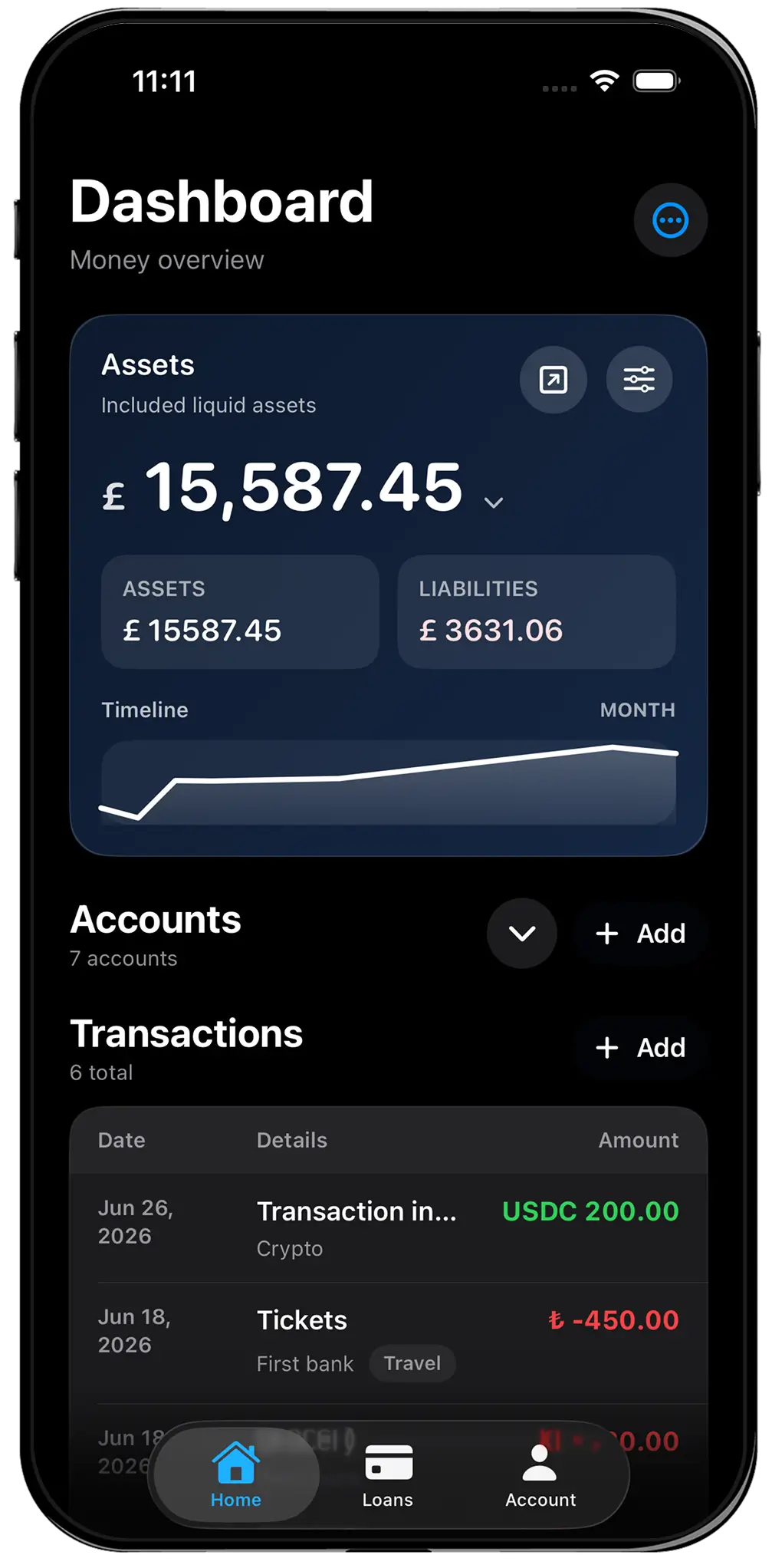
All Banks is designed around fragmentation. An expat may have salary in euros, savings in dollars, family obligations in pounds, cash in a local currency, stablecoins, and a loan whose payment schedule belongs beside everything else. Converting every holding into one total while preserving the original currency is a different job from maintaining a single-currency net worth list.
Workspaces add another layer. Personal, business, travel, and crypto balances can live in one app without becoming one undifferentiated list. You can filter the financial picture without creating multiple files or separate accounts. That becomes useful for freelancers and founders whose legal and practical money contexts overlap but should not be mentally merged.
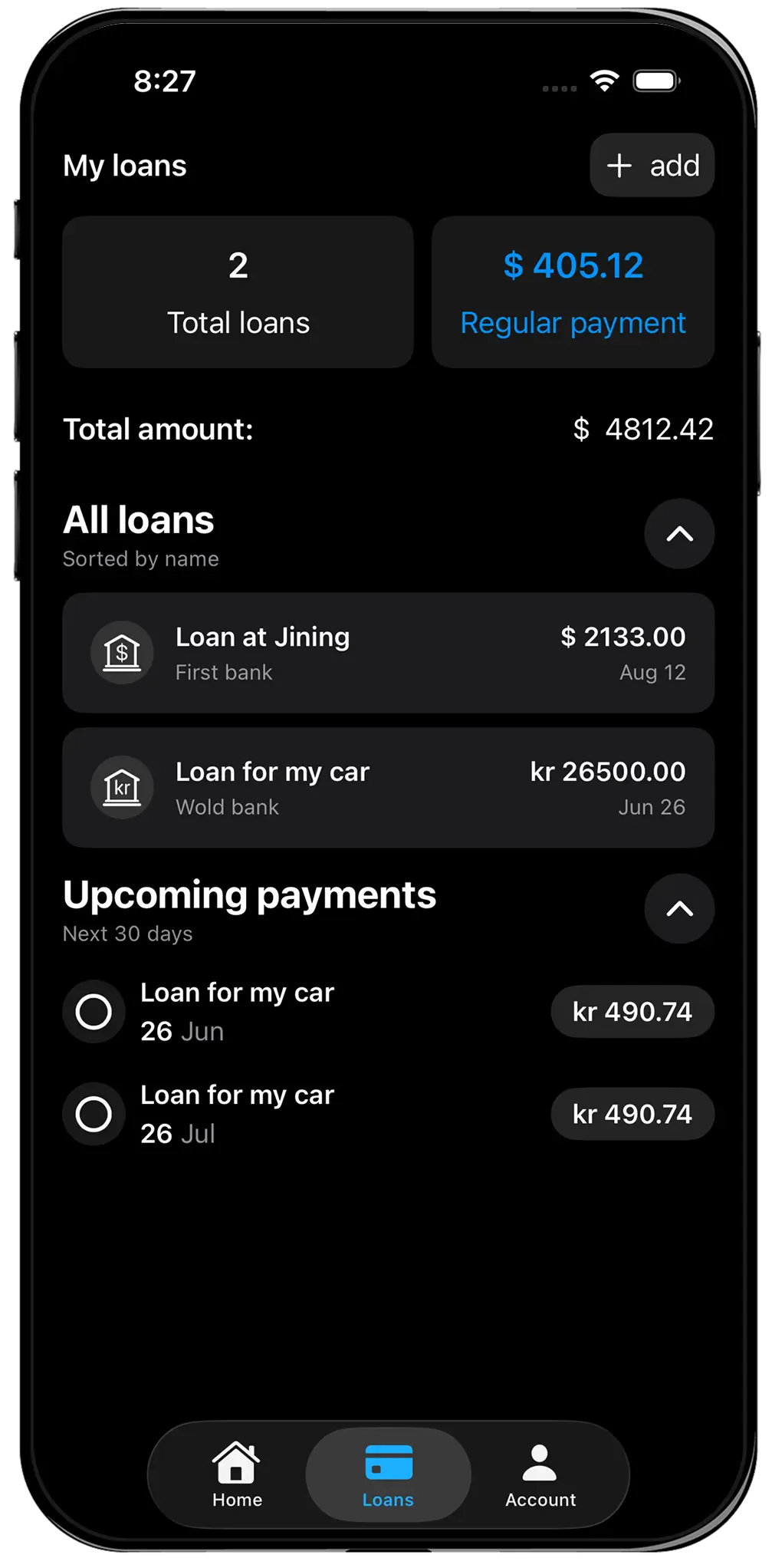
All Banks also treats a financial snapshot as an artifact. Money Brief, Personal Financial Statement PDF, JSON backup, and dated snapshots are designed for moments when the information must leave your head: preparing for a move, explaining finances to a partner, reviewing a property decision, or keeping a durable personal record. Worthy offers export and backup, but All Banks puts more emphasis on readable documents.
Privacy: this comparison is mostly a draw
Both products make manual entry a privacy model rather than an apology. Neither requires Plaid or a bank connection. Both describe on-device storage, and both let the user keep control of the record. Worthy says it uses anonymous, opt-out analytics; All Banks keeps financial records local by default and offers optional encrypted Cloud Sync as a separate service.
That means privacy alone is not a persuasive reason to spend more on All Banks. The meaningful difference is the shape of the record built on top of that private foundation. If both products meet your threat model, choose on workflow, currencies, documents, and platform—not a vague promise that one is 'more private.'
Crypto and investments: look beyond the checkbox
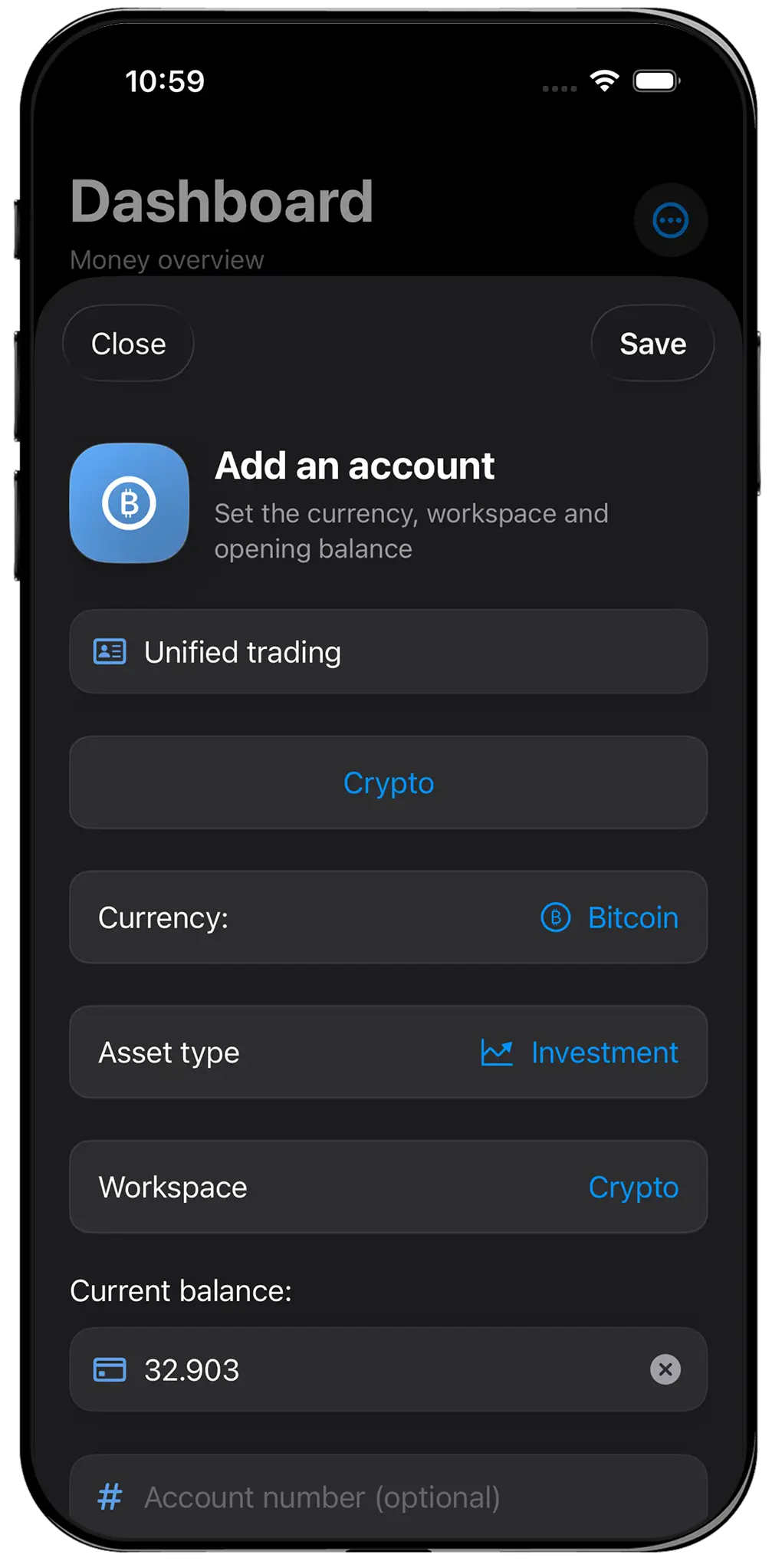
Both apps can include crypto in net worth, but they approach the job differently. Worthy supports crypto and stock price updates through external pricing services. That can reduce manual maintenance for a conventional portfolio. All Banks supports a defined set of manual crypto holdings and places them beside cash, bank balances, currencies, and debt.
If automatic security prices are important, Worthy may be preferable. If you mainly need a private cross-border balance sheet containing fiat, stablecoins, and liabilities, All Banks may fit better. Neither product should be confused with a brokerage, exchange, tax-lot tracker, or portfolio-management service.
The honest recommendation
Buy Worthy if your financial life is coherent enough to fit in one private net worth list. You will save $83, keep the no-subscription model, and still get a capable product with debt insights and optional market-price updates.
Buy All Banks if the coherence is exactly what you are missing: money across countries, several original currencies, separate workspaces, crypto beside fiat, loan schedules beside assets, and PDFs that turn the current state into a shareable or archivable record. The higher price is payment for that system, not for a prettier net worth number.
Prices and features were checked against the companies' public pages in August 2026. App Store prices, taxes, currencies, and product features can change; verify the checkout screen before purchasing.