Copilot's strongest feature is the thing All Banks removes
Copilot Money is built around connected financial data. During onboarding, users connect accounts through a data aggregator; Copilot then imports history, suggests categories, builds an initial budget, and identifies income. Plaid is one connection route, and Copilot also uses additional aggregators and direct integrations. Saying that Copilot is 'just Plaid' would be inaccurate.
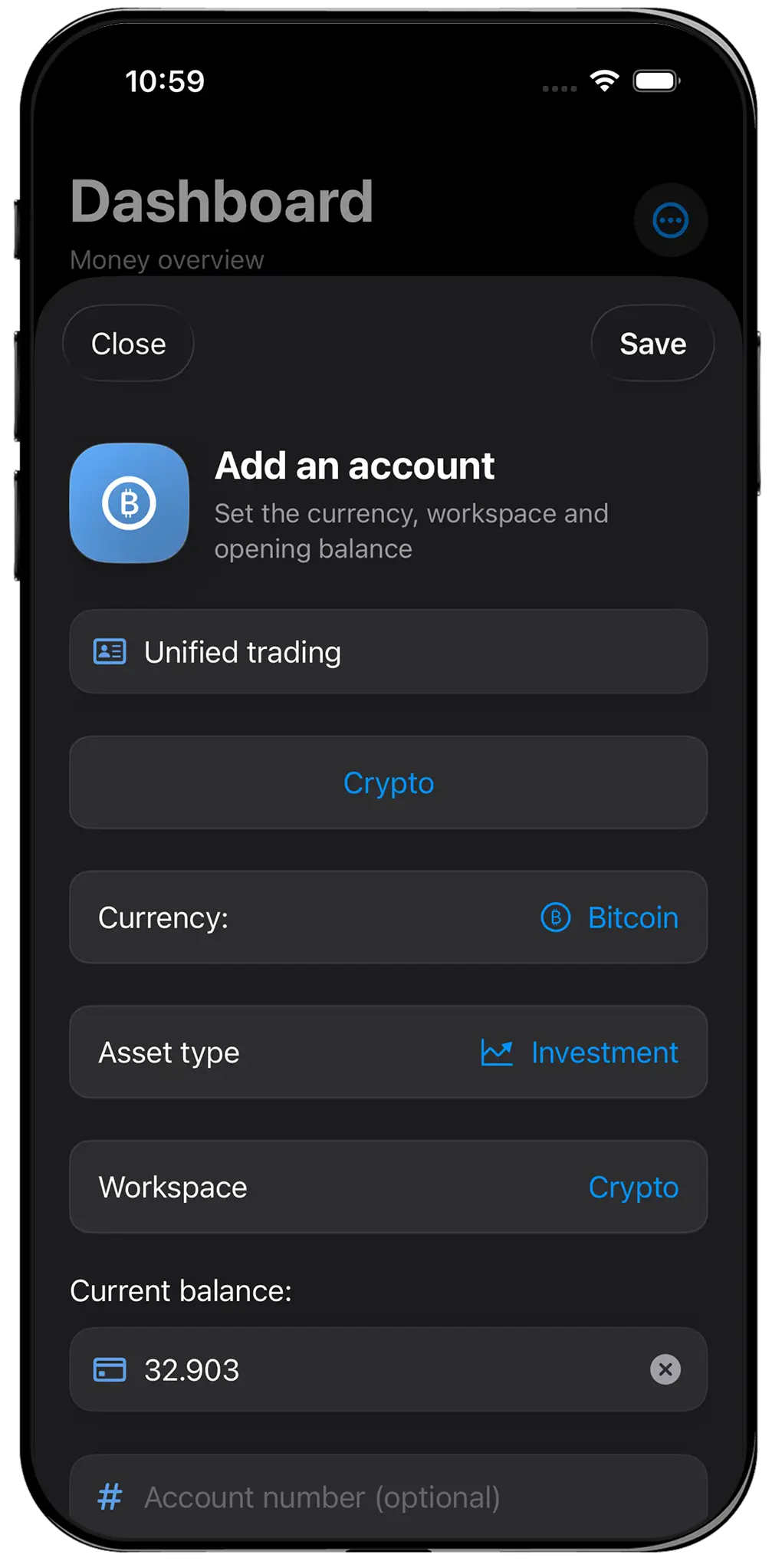
All Banks never asks for a bank, exchange, or brokerage login. Balances and transactions enter because the user records them. That makes it a genuine no-bank-connection alternative, but it also means there is no automatic feed hiding behind the privacy claim.
This is the central decision. If importing and cleaning transactions is valuable, removing connections removes value. If sharing financial access with any aggregation layer is unacceptable, Copilot's most polished automation cannot satisfy the requirement.
Where Copilot is clearly better
Copilot has earned attention for design. Its dashboards, categories, transaction review, monthly summaries, investment views, and recurring-payment tools turn dense financial activity into an interface people often enjoy using. The company was an Apple Design Award finalist, and the product remains especially strong across iPhone, iPad, and Mac while now also offering a web app.
It is also a much fuller spending system. Imported transactions feed budgets and categories; repeated review improves suggestions; recurring expenses can be detected and scheduled. All Banks lets users record transactions, but it is not trying to match Copilot's automatic behavioral picture.
Copilot supports manual accounts too. That matters when a property, cash account, or unsupported holding needs to be represented. The difference is that manual entry is an option inside a connected system, while in All Banks it is the governing privacy model.
- You want daily spending to appear automatically
- A refined Apple-platform interface is a priority
- Budgeting, recurring expenses, and category intelligence matter
- Your financial institutions are US-based and supported
- You accept an annual or monthly subscription for ongoing connectivity
Where All Banks is the better fit
All Banks is appropriate when the absence of a connection is not negotiable. Some users do not want another service to receive account data. Others have international banks, cash, crypto wallets, business balances, or private assets that aggregators cannot represent consistently. Manual entry provides a common denominator across all of them.
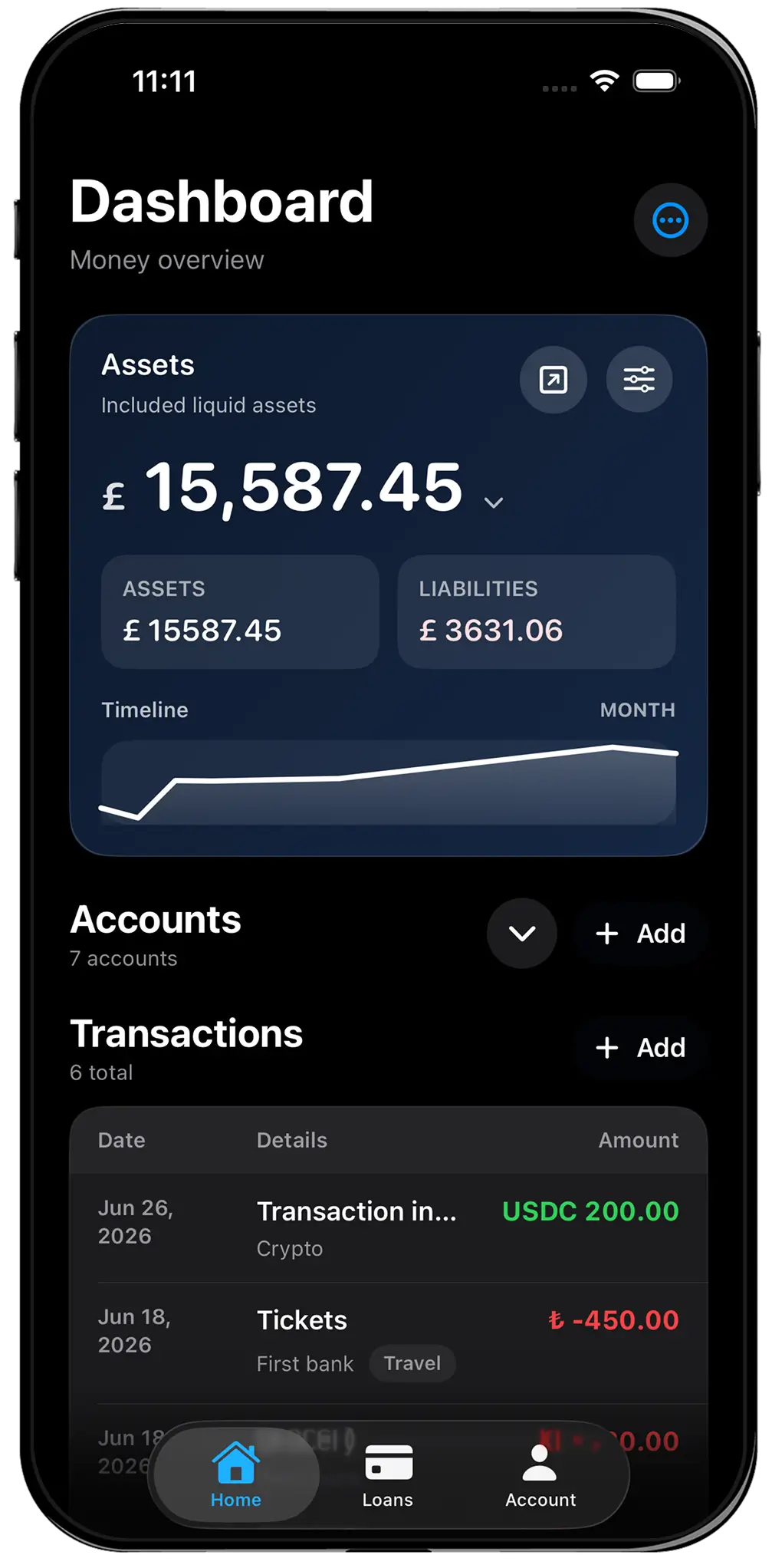
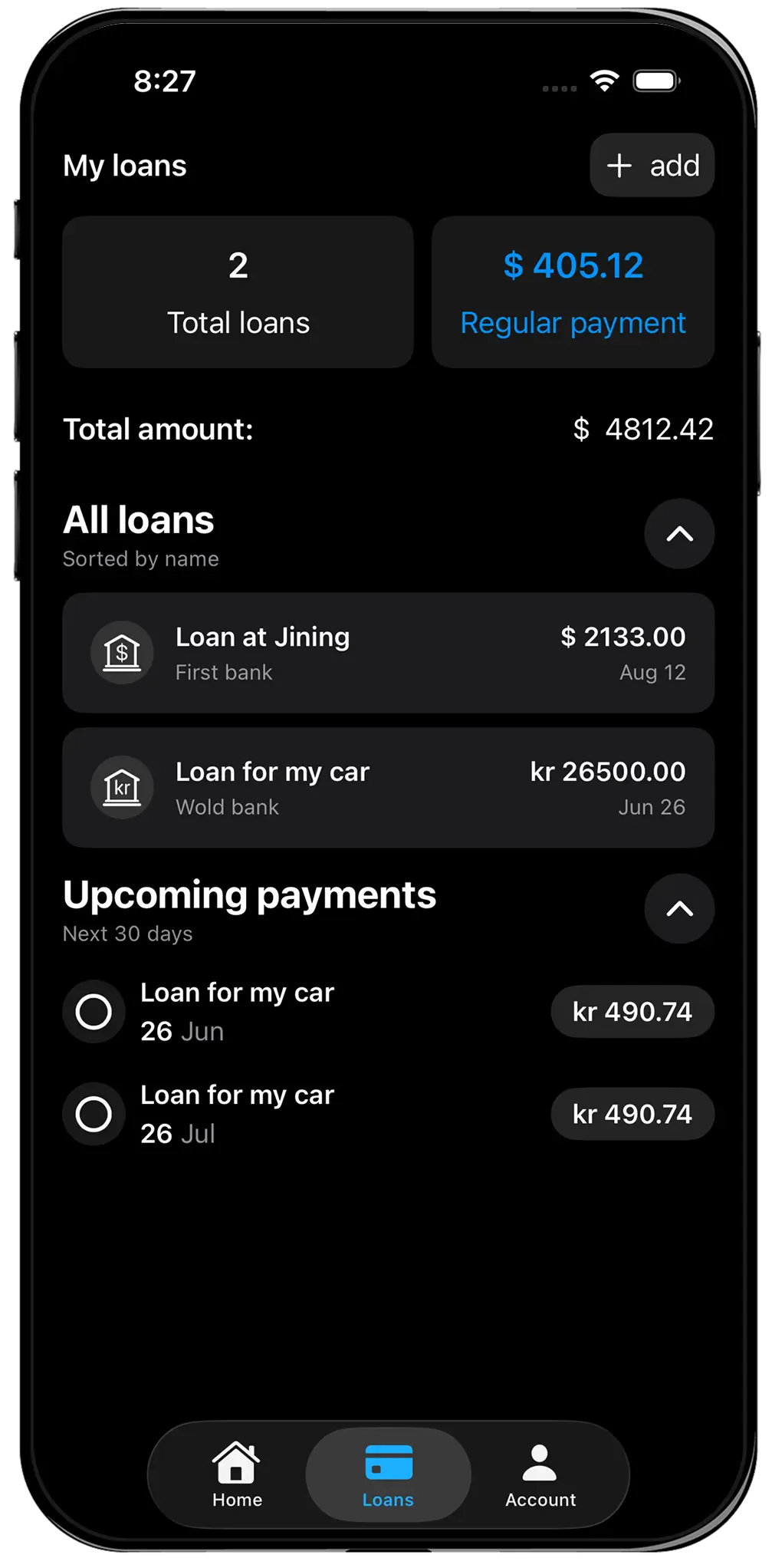
The app focuses on the balance sheet rather than the feed. Original currencies remain visible while a chosen currency produces the consolidated total. Assets and liabilities appear together. Workspaces separate contexts such as personal, business, travel, and crypto. Loan schedules and upcoming payments prevent debt from becoming a single stale number.
Money Brief and PDF snapshots are another distinction. They are useful when the goal is to prepare a dated financial record rather than browse an always-moving dashboard. A person relocating, reviewing a major purchase, or documenting a personal financial statement may value that artifact more than automatic restaurant categorization.
Privacy without caricaturing Copilot
Copilot says it does not sell user financial data and does not show ads. It also says bank credentials are handled by secure data providers rather than stored by Copilot. Those are meaningful protections. A fair comparison should not imply that using an aggregator means handing a raw password directly to Copilot.
The privacy difference is architectural. Copilot needs account data to deliver its connected features. All Banks does not need that data flow because it does not deliver those features. Local-first records reduce exposure, while manual maintenance increases effort and the risk that a forgotten balance becomes stale.
For many users, reputable aggregation with encryption and multifactor authentication is an acceptable trade. For others, no connection is the requirement itself. Both positions can be rational.
Subscription versus ownership
Copilot currently lists $95 billed yearly or $13 monthly on its website. All Banks keeps core tracking free and offers Pro at $49.99 once; optional annual Cloud Sync is $19.99. That comparison ignores taxes, trials, legacy Copilot pricing, and future changes.
The recurring fee supports a recurring service: connections, data processing, categorization, and cloud access. All Banks can charge once because the user and the device do more of the ongoing work. The price model follows the architecture.
Do not choose based on a five-year spreadsheet unless you expect to use the product for five years. First choose the workflow you will maintain. Then use long-term price as a tie-breaker.
Who should switch—and who should not
A Copilot user should consider All Banks when they are paying mainly for net worth visibility, rarely use transaction automation, want to remove financial connections, or have moved beyond the US account ecosystem. They should expect to rebuild balances manually and lose automated history.
A satisfied Copilot user who relies on budgets, smart categories, recurring detection, and transaction review should probably stay. All Banks would not be a cheaper copy; it would be a different operating model with more work.
Features and prices were checked against Copilot's official site and help center in August 2026. Product availability, data providers, and subscription pricing can change. Verify the current terms and supported institutions before deciding.