The short answer: Plaid is established, not risk-free
Plaid is a major financial-data network used to connect bank accounts to budgeting, lending, investing, payment, and other apps. Plaid says connections begin with user permission, data is protected with encryption and continuous monitoring, and users can review or disconnect supported connections through Plaid Portal.
Its trust materials list controls and certifications including SOC 2 Type 2, ISO 27001, and ISO 27701. These are meaningful signals that security processes exist and are independently assessed. They are not guarantees that no employee, system, partner, financial institution, or connected app will ever make a mistake.
The useful answer to 'Is Plaid safe?' is therefore conditional. It can be a reasonable connection layer, but using it shares financial data across more parties than manual tracking. Whether the convenience justifies that exposure depends on the app, permissions, institution, and user.
How a Plaid connection works
A finance app asks Plaid to start a connection. The user chooses a financial institution, authenticates, selects accounts or permissions when the flow allows it, and authorizes data sharing. Plaid then helps transmit approved information to the app so balances, identity details, transactions, or other requested functions can work.
With OAuth connections, the bank's own authorization page handles sign-in and issues access without giving the third-party app the bank password. Not every institution and connection works identically, and Plaid's privacy policy states that when login data is provided, the user authorizes Plaid to access and transmit financial-institution data on their behalf.
Read the actual consent screen. The risk is not defined by the Plaid logo alone. A cash-flow app requesting transactions, a lender verifying income, and an identity product requesting documents may receive very different categories of information.
What happened in the 2026 Plaid data breach
Plaid sent breach notifications dated April 27, 2026 concerning an inadvertent disclosure. The public Maine Attorney General filing reports 294 affected people, four of them Maine residents, with the underlying event dated December 25, 2024 and discovery on April 22, 2026. Plaid offered two years of identity-protection services.
Publicly indexed notice information describes a phone-number recycling problem: a number previously associated with one person could later belong to another, creating an account mismatch that could expose information associated with the earlier owner. This was a real reportable privacy and security incident, but it was not evidence that every Plaid user's bank password or transaction history was dumped in a mass hack.
Precision matters. Searching 'Plaid data breach' also surfaces incidents at banks, fintech apps, or vendors that happened to use Plaid. A breach at a connected company is not automatically a breach of Plaid's systems, though it still illustrates that connected data can travel through an ecosystem with several risk points.
The 2022 privacy settlement was not the same thing
Plaid resolved a class-action privacy litigation in 2022. The settlement materials describe allegations about data collection, storage, use, disclosures, and the appearance of historical Plaid Link screens. Plaid agreed to enhanced disclosures and controls without the event being described as a hacker stealing a database.
Calling that lawsuit 'the Plaid breach' confuses privacy governance with unauthorized intrusion. Both subjects matter, but the remedy differs. Privacy questions ask whether users understood what was collected and how it was used. Breach questions ask whether information was exposed to unauthorized people.
A careful decision considers both Plaid's current policies and its history. Past disputes do not prove current insecurity, and current certifications do not erase earlier concerns.
Risks beyond Plaid itself
The connected app matters. Plaid may transmit data securely, but the receiving budgeting, lending, payment, or investment company must also store and use it responsibly. Review that app's privacy policy, deletion process, security history, and business model before connecting.
Your bank and email accounts matter too. Reused passwords, weak recovery settings, phishing, and an unprotected email inbox can defeat strong infrastructure. Plaid advises users who receive an unexpected connection notification to report and disconnect it, review accounts, contact providers if necessary, and change relevant passwords.
Permissions can outlive attention. People forget which apps remain linked after a trial or abandoned signup. Periodically review connections in Plaid Portal and inside the financial institution, remove services you no longer use, and delete data where appropriate.
- Confirm the exact app and reason for connection
- Prefer bank-hosted OAuth when available
- Read requested data categories before approving
- Use unique passwords and multifactor authentication
- Review Plaid Portal and bank-linked apps periodically
- Act immediately on an unrecognized connection alert
When using Plaid is a reasonable trade
Plaid can make sense when automatic balances and transactions create substantial value, the receiving app is reputable, permissions match the purpose, and the bank supports a clear authorization flow. Many budgeting and planning workflows would be burdensome without aggregation.
Connected data can also improve accuracy by reducing missed accounts and manual entry errors. A security decision should include the cost of the alternative: stale balances, abandoned tracking, or unsafe spreadsheet sharing can create their own problems.
Use the narrowest connection that accomplishes the task, revisit it, and understand that authorization is a continuing relationship rather than a one-time button press.
When to choose a net worth tracker without Plaid
Choose manual tracking if third-party access is a hard boundary, if accounts span unsupported countries, or if you need only a monthly balance sheet rather than daily transaction automation. The trade is additional effort and a record that can become stale.
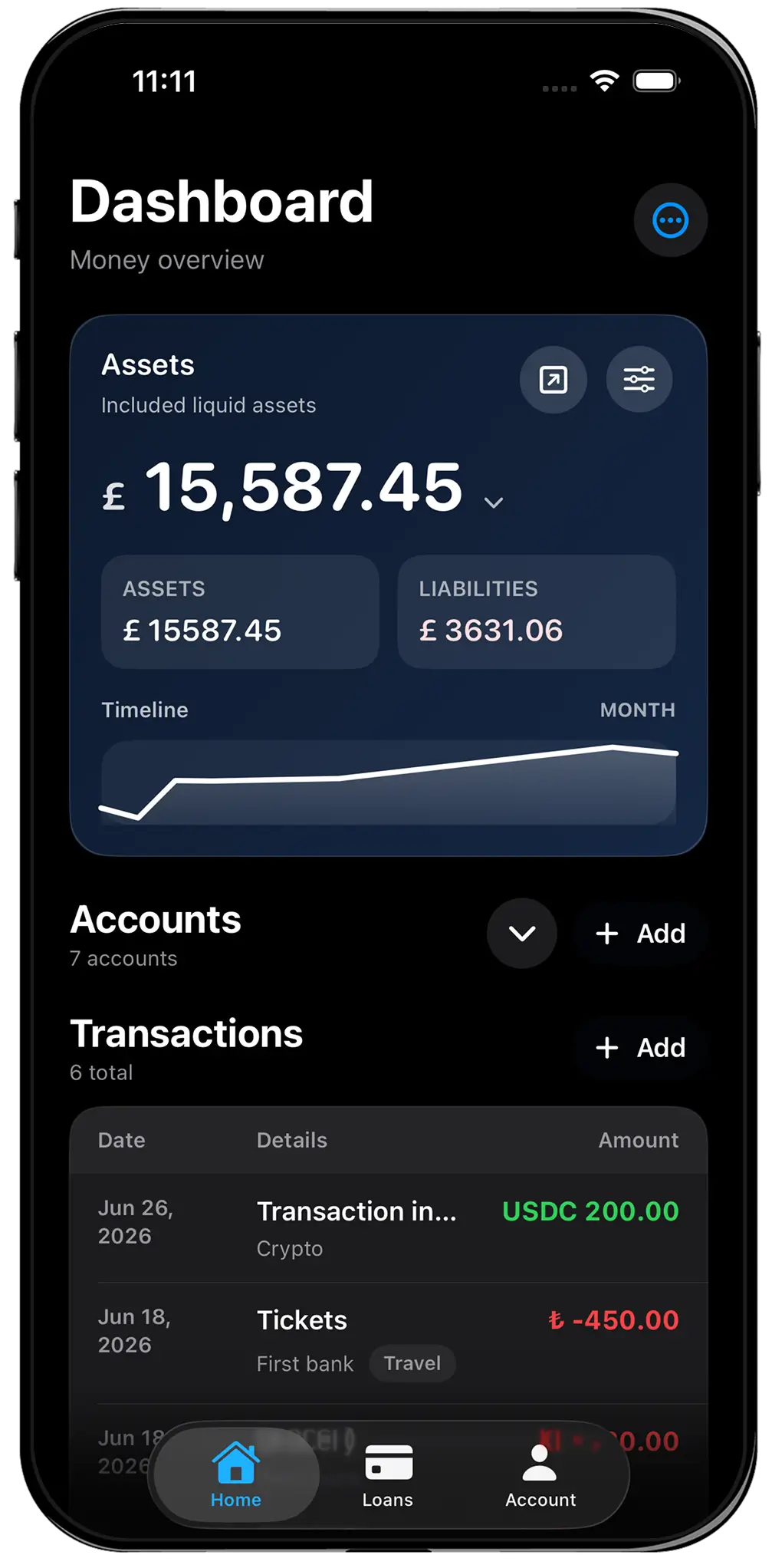
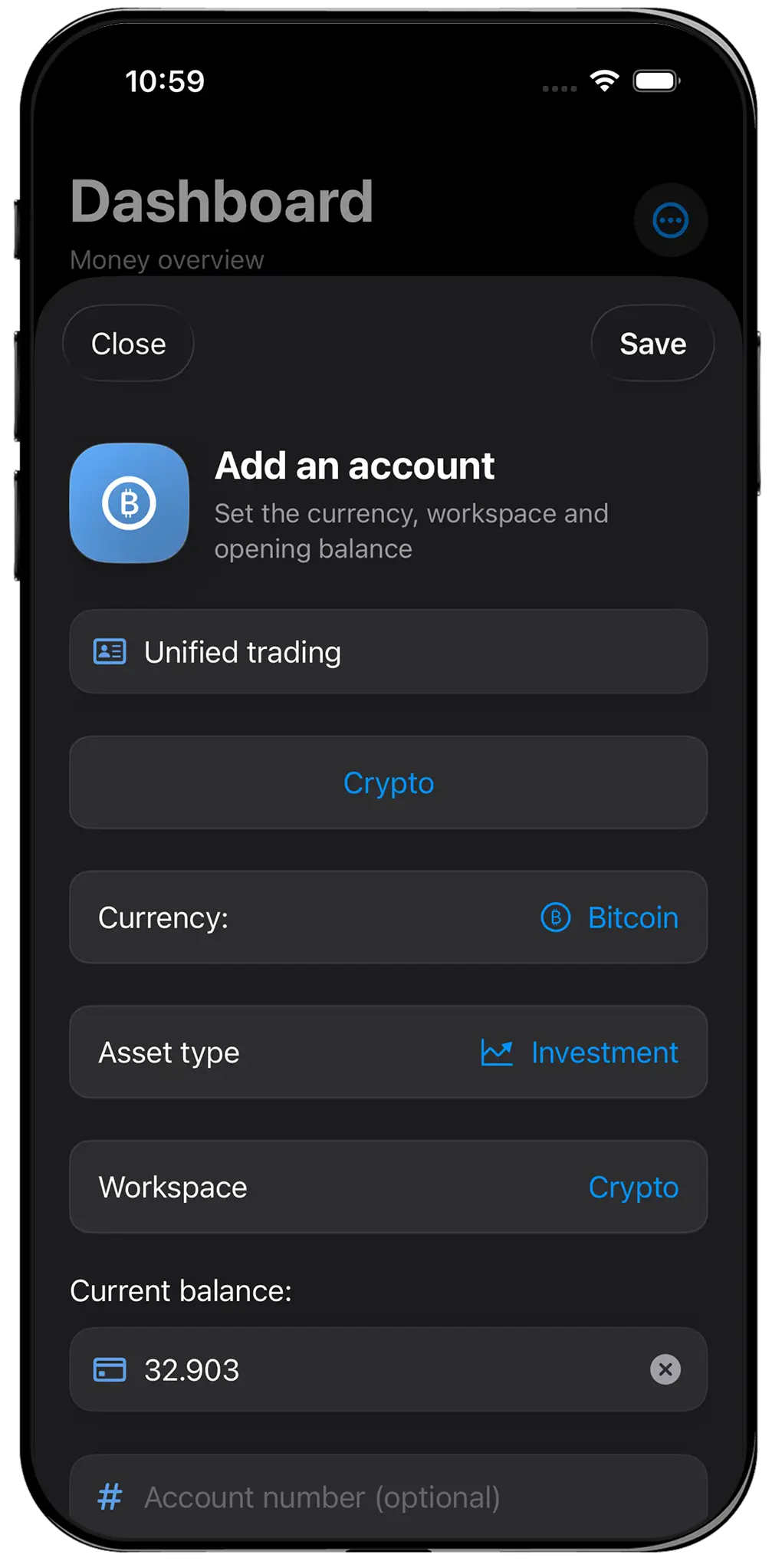
All Banks does not use Plaid, open banking, or bank credentials. Users manually enter balances, currencies, supported crypto, and loans; records stay on the device by default, with optional encrypted Cloud Sync. That removes the aggregation layer but does not make the device or backups invulnerable.
Neither choice is universally correct. Plaid provides convenience with a managed security and privacy surface. Manual entry provides a smaller connection surface with more personal maintenance. Choose the set of risks and responsibilities you understand and will manage.