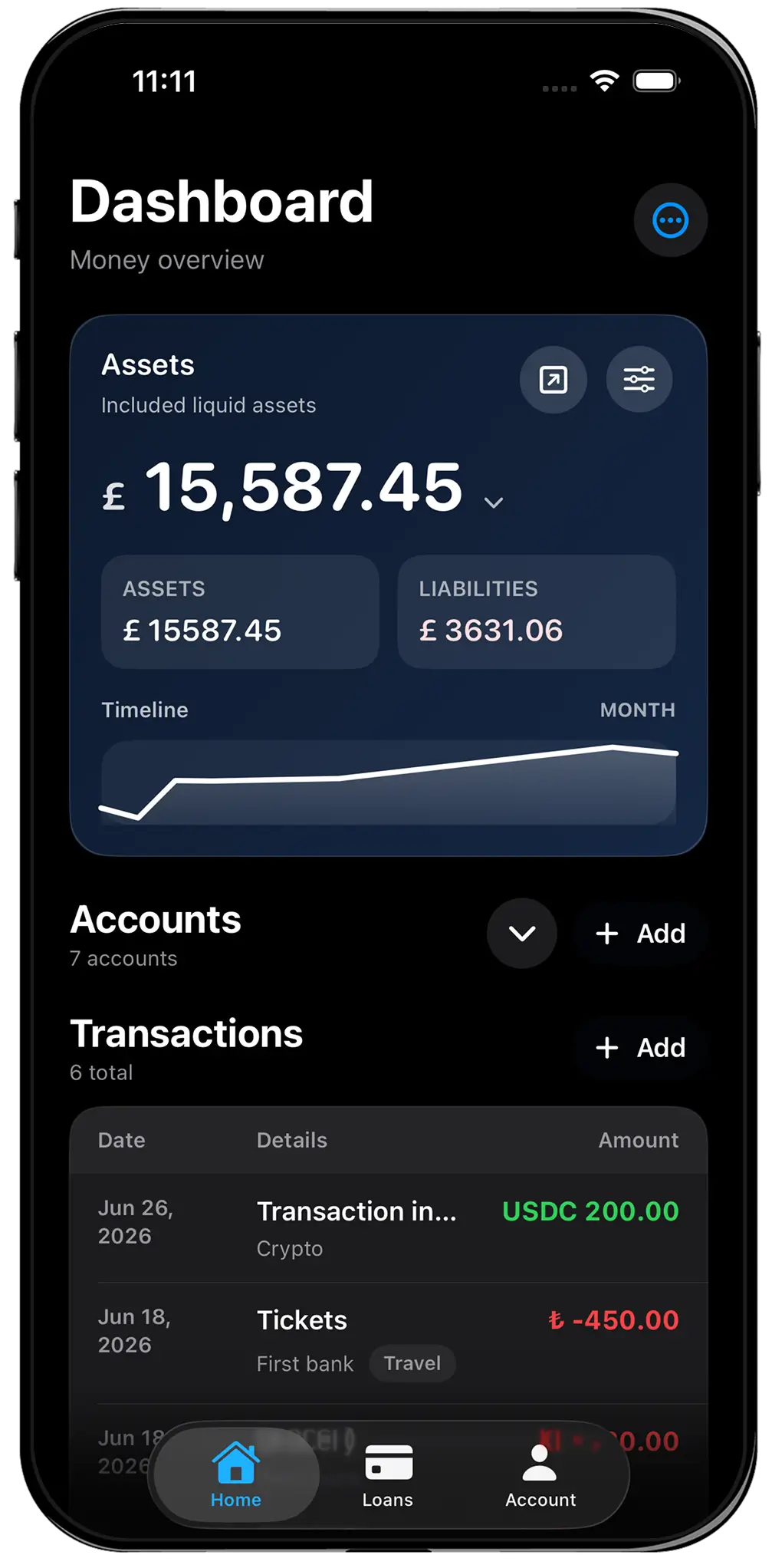
The net worth formula
Net worth equals total assets minus total liabilities. Assets are things you own that have a measurable current value. Liabilities are amounts you currently owe. If assets total $300,000 and liabilities total $125,000, net worth is $175,000. If debts exceed assets, net worth is negative; the same formula still works.
The Federal Reserve uses the same core definition in its Survey of Consumer Finances: net worth is the difference between families' assets and liabilities. That makes net worth a stock measure—a position at a particular date—not a flow such as annual income or monthly spending.
Always attach a date. A house value, stock portfolio, loan balance, and exchange rate can all change. '$175,000 as of August 31' is meaningful. '$175,000' without a date can quietly become misinformation.
A net worth template you can copy
Create two sections. Under assets, list cash and bank accounts, investments and retirement accounts, business interests you can value reasonably, real estate, vehicles if material, supported crypto, and other significant property. Under liabilities, list credit-card balances, mortgages, student loans, vehicle loans, personal loans, taxes currently owed, and other enforceable debts.
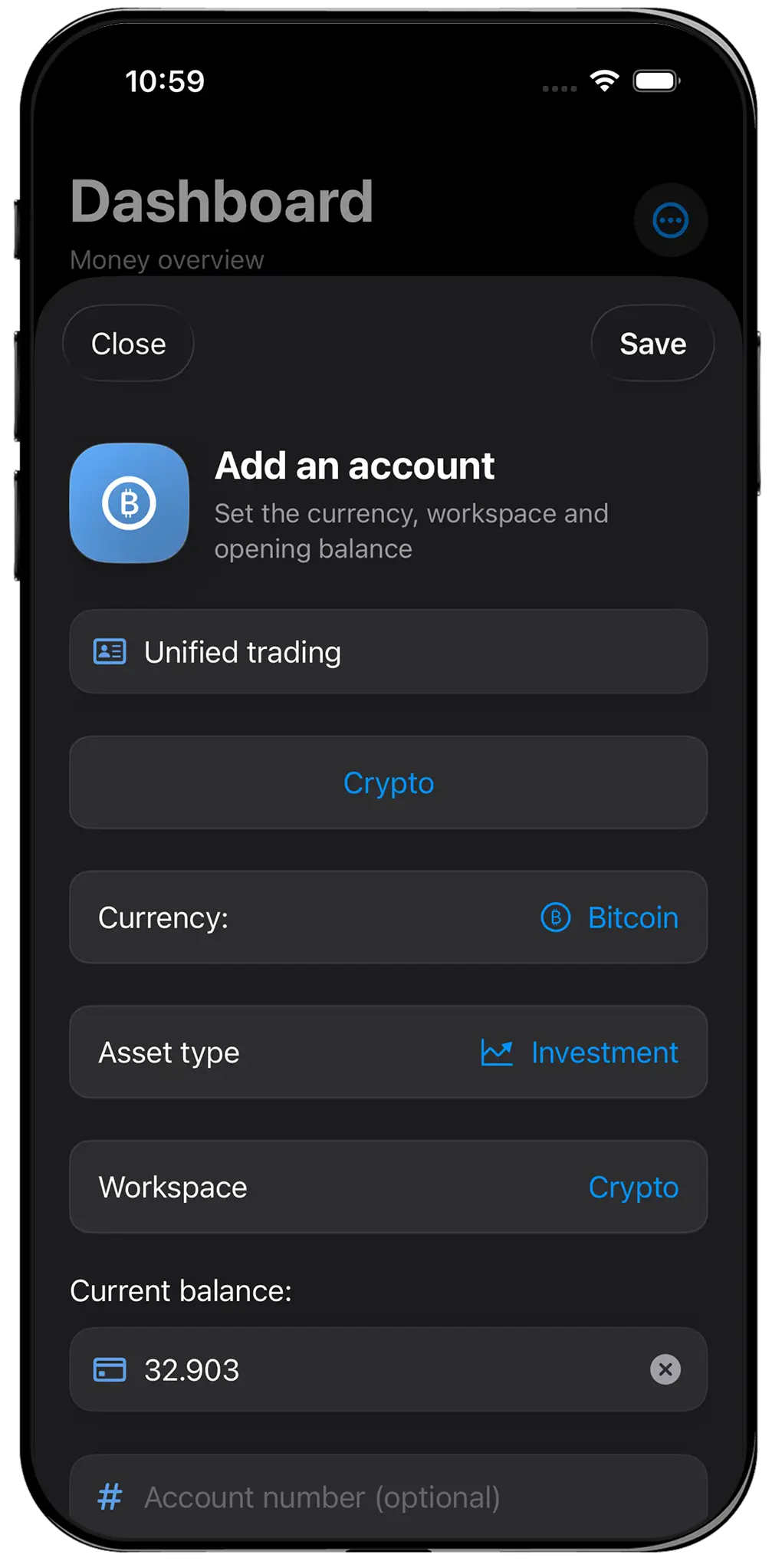
Give every line four fields: item name, category, current value, and valuation date. Add original currency when money crosses borders. Optional fields can include owner, workspace, source, and a note explaining how a non-cash item was valued.
Total assets, total liabilities, and subtract. Keep the raw lists visible. A single headline number without its components makes errors hard to find and hides concentration—for example, whether nearly all wealth is home equity or one volatile asset.
- Asset or liability name
- Current balance or realistic value
- Original currency
- Valuation date
- Category or workspace
- Short valuation note for property or private assets
What to include as an asset
Include checking, savings, physical cash, money-market balances, certificates of deposit, brokerage holdings, and retirement accounts at their current statement or market values. Include vested investments, not hypothetical future grants. If an account has withdrawal restrictions or taxes, keep those facts in mind without inventing an arbitrary discount unless the purpose of the calculation requires it.
Real estate can be included at a reasonable current market estimate, with the mortgage listed separately as a liability. Do not include only home equity and then subtract the mortgage again; that double-counts the debt. Vehicles and valuable property can be included when they are material and could realistically be sold, but ordinary household items usually add noise.
Crypto can be included at a dated reference price while preserving the native quantity. Private-company equity and business interests require caution: use a defensible valuation, document the method, and consider showing illiquid assets separately. The goal is a personal balance sheet, not the largest possible number.
What belongs under liabilities
Use current payoff or statement balances for mortgages, credit cards, student loans, vehicle loans, personal loans, margin debt, and lines of credit. Include taxes or legal obligations that already exist and can be measured. A scheduled payment is not the liability itself; it is the cash-flow consequence of the remaining balance.
Subtract credit cards even when you pay them in full each month. The balance is owed on the snapshot date. When the corresponding cash leaves the bank later, both the asset and liability change, preventing the purchase from disappearing from the balance sheet.
Do not convert all future rent, groceries, insurance premiums, or optional subscriptions into liabilities. They are expected expenses, not current debts. Long-term contractual obligations can matter for planning, but mixing them into ordinary net worth makes comparisons inconsistent.
What not to include
Do not count future salary, expected bonuses, possible inheritance, unvested equity, or hoped-for investment returns. They may belong in a plan, but they are not owned assets today. Do not count credit limits; available borrowing is not wealth.
Avoid assigning resale value to every laptop, chair, and kitchen item. If these objects would not be sold individually or their value is trivial relative to the balance sheet, exclude them consistently. Personal value is not the same as market value.
Do not include the face value of life insurance unless the policy has a current cash value that is actually part of the calculation. Do not count the same asset through several accounts, and do not count a jointly owned asset at 100 percent without deciding whose net worth the snapshot represents.
How to handle multiple currencies
Keep each asset and liability in its original currency, then convert every item into one reporting currency using rates from the same date. Convert both sides of the equation. A foreign loan can become more burdensome in the reporting currency even when its native balance does not change.
Treat the converted total as an estimate. Reference rates can differ from executable bank or exchange rates and do not include every fee. Preserve the native balance so next month's change can be separated into saving, debt repayment, market movement, and exchange-rate movement.
All Banks is built around this structure: manually entered accounts keep their currencies while the dashboard produces a chosen consolidated view. The converter assists review; the app does not execute foreign exchange.
Common net worth calculation mistakes
The most common mistake is mixing dates. A current bank balance, last year's property estimate, and an old mortgage payoff can produce a precise-looking fiction. Update material items together and show the review date prominently.
Other errors include adding gross property value while forgetting secured debt, using purchase price instead of current value, counting future income, treating credit limits as assets, omitting small debts, and mixing personal and business ownership without a rule. Spreadsheet formulas can also miss a row or reverse the sign of a liability.
Review the components before celebrating the total. Ask what caused the change, which values are estimates, what is liquid, which assets are concentrated, and which payments arrive next. Net worth is a useful summary, not a complete financial plan or measure of personal worth.
How often should you calculate net worth?
Monthly is frequent enough for many households. Weekly review can help during active debt reduction or a major transition. Quarterly may be appropriate when most assets are illiquid and balances change slowly. Daily updates often amplify market noise without improving decisions.
Use the same method each time. Consistency makes history interpretable. If you change a valuation rule—such as beginning to include vehicles—note the change so the chart does not pretend a methodological adjustment was new wealth.
A dedicated app can reduce repeated setup. All Banks records assets, liabilities, currencies, workspaces, and dated history, then creates personal PDF snapshots and backups. A spreadsheet remains better when you need custom scenarios or shared modeling. Use the format you will maintain accurately.